
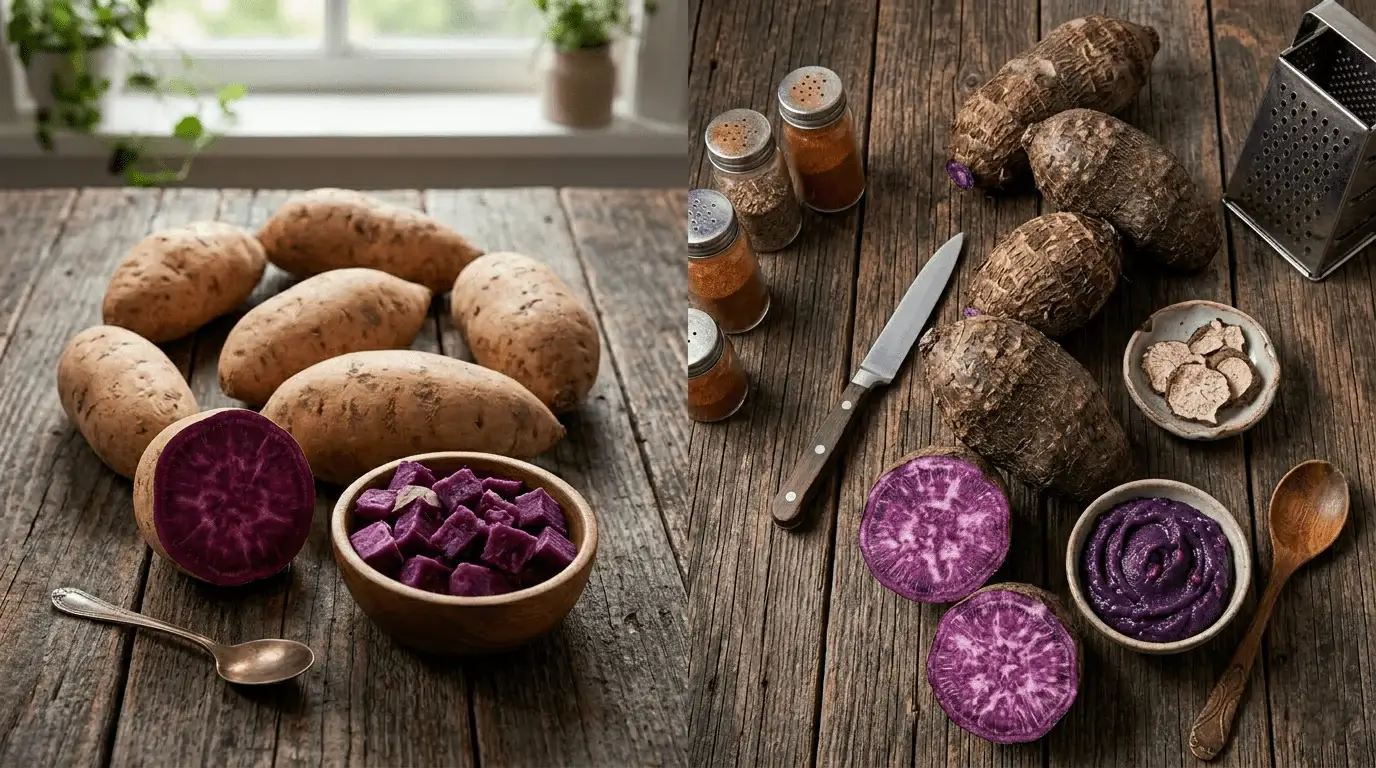
Ube has become one of the most recognizable purple ingredients in modern food culture. Its vibrant color appears in ice cream, cakes, lattes, pancakes and pastries across the world. Many people assume that ube and purple yam are identical terms, while others believe they are completely different foods. The reality sits somewhere in between.
Confusion often comes from language and regional naming conventions. In the Philippines, ube yam refers to a specific species of purple yam known for its sweet flavor and striking violet flesh. In other countries, the expression purple yam may describe several different yam varieties that share a similar appearance but not necessarily the same taste, texture or nutritional profile.
Anyone shopping for authentic ube products will quickly notice labels mentioning ube yam, purple yam powder, purple sweet potato or even taro. These ingredients are frequently grouped together despite important differences. Understanding those distinctions can help consumers make better choices when cooking, baking or selecting nutritious foods.
The story of ube resembles a colorful thread running through traditional cuisine and modern food trends. Its unique flavor, nutritional qualities and cultural importance make it far more than a simple social media phenomenon. The details behind its origin, composition and culinary uses reveal why this purple root vegetable continues to attract attention from nutrition enthusiasts and food lovers alike.
Understanding what ube really is
Ube is scientifically known as Dioscorea alata. It belongs to the yam family and has been cultivated for centuries throughout Southeast Asia, particularly in the Philippines. The tuber develops a naturally vibrant purple color due to plant pigments called anthocyanins.
Many consumers mistakenly identify ube as a sweet potato because both vegetables can display purple flesh. Despite visual similarities, they belong to different botanical families. Sweet potatoes come from the species Ipomoea batatas, while ube belongs to the Dioscorea genus.
The flavor profile of ube also sets it apart. It offers a mild sweetness combined with subtle notes that many people describe as vanilla, pistachio or coconut. This distinctive taste explains its popularity in desserts and baked goods.
Traditional Filipino cuisine uses ube in a wide variety of preparations. Ube halaya, a sweet jam made from boiled and mashed ube, remains one of the most beloved examples. The ingredient is also incorporated into cakes, breads, pastries and frozen desserts.
Its growing popularity has expanded far beyond Southeast Asia. Cafés, bakeries and food manufacturers now feature purple yam desserts as premium products because the ingredient delivers both visual appeal and a unique flavor experience.
Are ube and purple yam exactly the same?
The answer depends largely on context. Technically, ube is a purple yam. Every ube belongs to the purple yam category. The opposite statement is not always true because not every purple yam is necessarily ube.
The term purple yam functions as a broad description rather than a precise botanical classification. Several yam varieties may produce purple flesh. Some share characteristics with ube, while others differ significantly in sweetness, texture and color intensity.
In grocery stores, labeling practices often create additional confusion. Products marketed as purple yam may contain authentic ube, another yam species or even purple sweet potato. Without examining the ingredient list carefully, consumers may struggle to identify what they are actually purchasing.
Color alone cannot guarantee authenticity. Certain purple sweet potatoes possess a deep violet hue that closely resembles ube. Manufacturers occasionally use these alternatives because they are easier to source or less expensive.
The most reliable way to distinguish authentic ube involves checking the botanical identity, country of origin and ingredient declaration. Products specifically labeled as Dioscorea alata generally provide the most accurate indication that genuine ube is present.
Nutritional characteristics of ube
From a nutrition perspective, ube offers several interesting qualities. Like many root vegetables, it provides complex carbohydrates that serve as a source of energy. It also contains dietary fiber, which contributes to digestive health and satiety.
The vibrant purple color is more than a visual attraction. Anthocyanins, the pigments responsible for the coloration, belong to a group of compounds known for their antioxidant activity. These compounds are also found in blueberries, blackberries and purple cabbage.
Ube contains varying amounts of essential nutrients, including:
- dietary fiber
- potassium
- vitamin c
- manganese
- anthocyanins
Compared with heavily processed snacks and desserts, whole ube can represent a nutrient dense carbohydrate source. The nutritional value depends heavily on preparation methods. A baked or boiled ube retains a different profile than an ube pastry rich in sugar and fat.
Consumers interested in colorful plant foods often appreciate ube because it combines attractive appearance with naturally occurring compounds associated with a balanced diet. It fits comfortably alongside other nutrient rich vegetables as part of varied eating habits.
How does ube compare with purple sweet potato?
Differences in flavor and texture
One of the biggest distinctions involves taste. Ube flavor tends to be sweeter and more aromatic than most purple sweet potatoes. Many people notice delicate vanilla like or nutty notes that are largely absent from sweet potatoes.
The texture also varies. Cooked ube often develops a creamy consistency that works exceptionally well in desserts. Purple sweet potatoes can be denser and drier, making them suitable for different culinary applications.
These sensory differences explain why professional bakers and chefs frequently seek authentic ube when creating traditional Filipino recipes. Substituting purple sweet potato may achieve a similar color but rarely replicates the exact flavor profile.
For consumers trying ube for the first time, the experience usually feels familiar yet distinctive. It combines characteristics of root vegetables with dessert like aromas that create a memorable culinary identity.
Nutritional similarities and distinctions
Both vegetables provide carbohydrates, fiber and beneficial plant compounds. Their overall nutritional profiles share many similarities, especially when consumed in minimally processed forms.
Specific nutrient concentrations may differ depending on variety, growing conditions and preparation methods. Purple sweet potatoes sometimes contain higher amounts of certain vitamins, while ube may offer different antioxidant profiles.
Neither ingredient should be viewed as universally superior. Each contributes valuable nutrients and can support a diverse dietary pattern. The choice often comes down to flavor preferences, recipe requirements and availability.
Individuals seeking colorful whole foods can benefit from including both ingredients in their meals. Diversity remains one of the strongest principles of balanced nutrition.
Popular culinary uses around the world
The global rise of ube has transformed it from a regional staple into an international culinary trend. Food enthusiasts appreciate its striking appearance and versatile applications.
Traditional preparations remain especially important in Filipino cuisine. Ube halaya continues to serve as the foundation for many desserts and festive dishes. Its smooth texture and concentrated flavor make it a favorite during celebrations.
Modern culinary innovations have expanded the ingredient’s reach. Ube now appears in:
- ice cream
- cakes
- doughnuts
- lattes
- cookies
- smoothies
Home cooks can purchase fresh tubers, frozen puree, powdered forms or extracts. Each format offers different advantages depending on the intended recipe. Frozen puree often provides convenience, while fresh ube delivers maximum authenticity.
The ingredient’s vivid color acts almost like nature’s paintbrush, transforming ordinary recipes into visually striking creations without relying on artificial dyes. This characteristic has contributed significantly to its popularity among food creators and social media users.
Choosing authentic ube products
Growing demand has increased the variety of products marketed under the ube name. Some contain genuine ube, while others rely on alternative ingredients designed to mimic its appearance.
Reading labels carefully remains essential. Consumers should look for references to Dioscorea alata, authentic ube puree or genuine ube powder. Ingredient lists often reveal whether purple sweet potato or artificial coloring has been used instead.
Color intensity can sometimes provide clues, though it should never serve as the sole indicator. Authentic ube typically exhibits a rich purple hue, yet natural variations occur depending on cultivation and processing methods.
Frozen puree often represents one of the most reliable options for culinary enthusiasts seeking authentic flavor. Specialty Asian markets and reputable online retailers frequently offer products sourced directly from regions where ube cultivation remains well established.
Consumers interested in both flavor and nutrition may find that authentic ube delivers a more distinctive experience than substitutes. Understanding labeling terminology makes navigating the marketplace far easier and helps avoid common purchasing mistakes.
Why the confusion continues today?
The widespread confusion surrounding ube and purple yam stems from overlapping terminology, regional naming differences and marketing practices. A single product category may include multiple species that share a similar appearance.
Social media has amplified awareness of purple foods, yet simplified descriptions often blur important distinctions. Many articles, recipes and product labels use the terms interchangeably because doing so appears easier for consumers.
Botanically speaking, authentic ube remains a specific yam variety with unique characteristics. Purple yam functions as a broader category that may encompass several related tubers. Recognizing that relationship resolves much of the misunderstanding.
For nutrition conscious consumers, the distinction matters less than choosing minimally processed products and maintaining dietary variety. For cooks, bakers and enthusiasts seeking authentic flavor, identifying genuine ube can make a significant difference.
Ube and purple yam are closely related concepts, yet they are not always interchangeable. Understanding their connection allows consumers to appreciate the cultural heritage, nutritional qualities and culinary uniqueness that have made this remarkable purple root vegetable so popular around the world.
